Alessi Electric Kettle Review 2026: Is It Worth Your Money?
The Alessi electric kettle looks like a piece of art you can plug into a wall. It has a pleated, sculpture style body that catches light and starts conversations. You will pay more than you pay for a basic kettle at a big box store. The question is simple. Do you get more than good looks for your money?
I tested the numbers, read the specs, and compared this kettle with the top models of 2026. Designers, home cooks, and tea lovers all have opinions about the Alessi Plissé. You will read those opinions here. You will also see the boil times, the materials, the real complaints, and the honest limits of this kettle.
In a Nutshell
If you want the short version before the deep dive, here is what matters most.
- Design leads everything. Michele De Lucchi shaped this kettle for Alessi, and the pleated thermoplastic resin body looks like folded paper. Most kettles look like tools. This one looks like a design object, and that single fact drives most buying decisions.
- The main model holds 1.7 liters. The Plissé MDL06 holds 57.5 fluid ounces and runs on a US plug at 1500 watts. A smaller 1 liter version also exists for tight counters, and Alessi sells a temperature control version for tea lovers who want exact heat.
- Build quality splits buyers. The whole body is BPA free thermoplastic resin, so it is lighter than steel kettles and easy to lift. CNET called it fully plastic and said it feels like it should cost less. That honest note matters when you spend $150 or more.
- Price sits in the premium tier. Amazon lists the 1.7 liter black Plissé near $175 and the 1 liter version near $150. European plug versions sell near $215 to $230. You pay for design, brand history, and a small footprint of manufacturing, not raw materials.
- Rivals beat it on technical features. The Fellow Stagg EKG Pro adds a brew timer and gooseneck control. The Smeg KLF03 carries a heavier steel build with 2,300 reviews. The Alessi wins on style, not on specs.
- Best for style focused buyers. Buy the Alessi if you host guests, love Italian design, and want a countertop object. Skip it if you want the fastest boil, the lowest price, or a metal body.
What Is the Alessi Electric Kettle?
Alessi is an Italian design house with a long history of turning kitchen tools into museum pieces. The company works with famous designers and lets them push shapes far past the normal rules. The Plissé kettle follows that tradition.
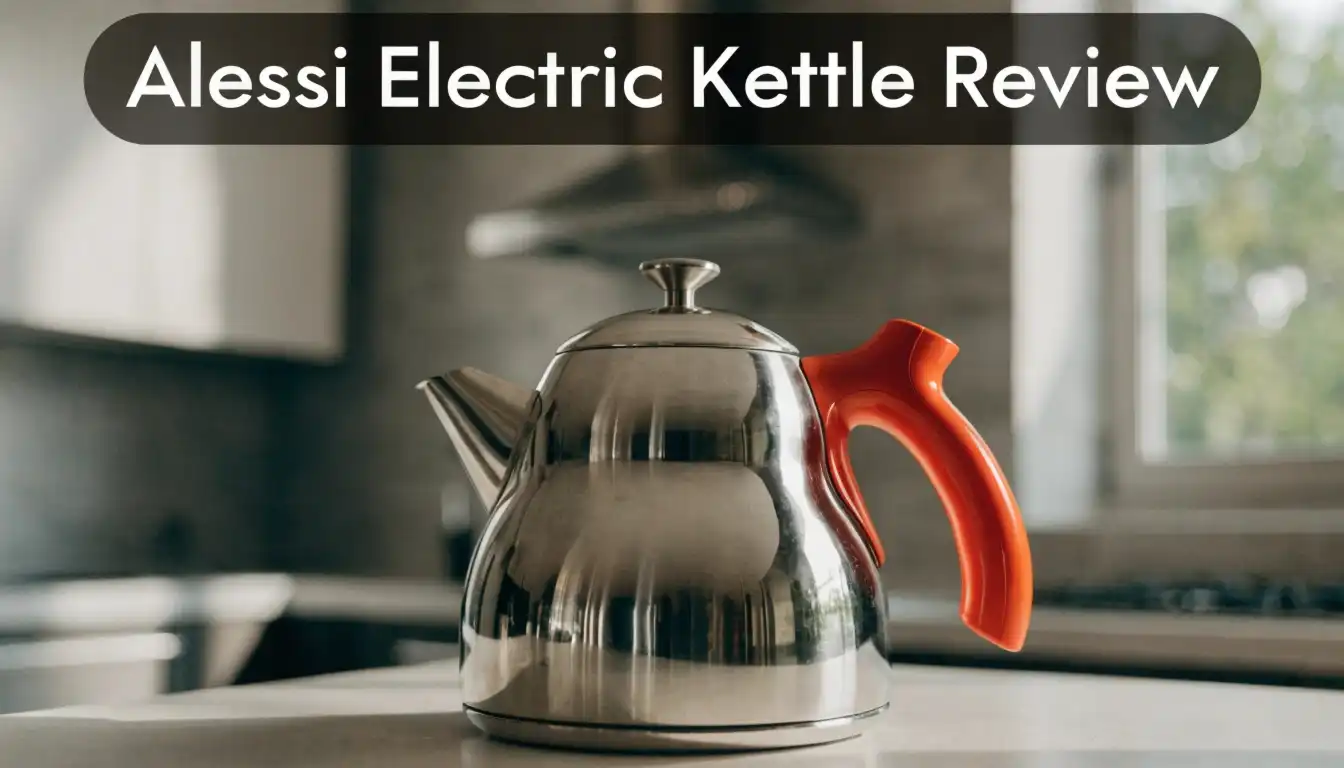
Michele De Lucchi designed the Plissé line, and his background in architecture shows in the body. The surface has deep folds that look like fabric or pleated paper. The handle rises in one smooth arc. The spout sits low and short. The whole shape reads as a sculpture first and an appliance second.
This is an electric kettle, not a stovetop kettle. You fill it, set it on the hidden base, and press the switch. The base stays cool, and the body lifts off with one hand. Alessi also makes famous stovetop pieces, such as the 9093 bird kettle and the Pulcina moka pot. Those are different products with different jobs.
The Plissé line comes in several finishes. Black and white are the main US options. You can also find grey and red in some markets. Buyers who collect Alessi pieces often buy two colors and switch them by season.
Alessi Electric Kettle Design and Craft

Last update on 2026-09-21 / Affiliate links / Images from Amazon Product Advertising API
The design is the whole reason this kettle exists in your cart. A normal kettle hides in a cabinet. A Plissé kettle stays on the counter because it earns its space. The folds create shadow and depth, so the body changes as light moves across the kitchen.
Michele De Lucchi described the shape as a mix of function and play. The pleats are not random decoration. They stiffen the resin walls, so the kettle stays light while holding its form. The result feels closer to a design object than a small appliance.
The handle is wide and open. It lets your whole hand wrap around the top, which helps when the kettle is full. Reviewers at Food and Wine praised the striking look and the fast boil, then noted that the wide handle is not the most comfortable grip for every hand. That mix of praise and caution fits this kettle well.
The finish resists fingerprints better than glossy steel. Smudges wipe away with a damp cloth. The seams line up cleanly, and the lid sits flush with the rim. Small details like the spout curve and the base trim show careful tooling.
Color choice matters more than you expect. Black hides water spots and looks sharp in modern kitchens. White shows tea stains sooner but reads softer in bright rooms. Whichever you pick, the shape stays the star.
Alessi Electric Kettle Specs and Boil Speed
The 1.7 liter Plissé MDL06 carries a 1500 watt heating element on the US plug. The body stands about 11.42 inches tall, 8.27 inches long, and 6.30 inches wide. The 1 liter model uses the same wattage and a shorter body.
A 1500 watt element boils one liter of water in roughly four to five minutes, depending on your starting water temperature. That number sits in the normal range for kettles in this class. It will not win a speed contest against a 1800 watt model, but it will not keep you waiting either.
European plug versions run at 2400 watts and boil faster. If you live in the United States, that extra power does not apply. Buy the US plug version and skip the voltage adapter problem.
The kettle holds enough water for four to six large cups. That suits small families, tea routines, and French press coffee. Large households that fill a big pot several times a day may want a bigger kettle.
The hidden base gives you a 360 degree swivel, so you can set the body down at any angle. The cord stores under the base, which keeps your counter clean. The interior includes a removable limescale filter, and Designboom noted how easy the lid opens and closes.
Top 3 Alternative for Alessi Electric Kettle
1. Fellow Stagg EKG Pro Gooseneck Electric Kettle

Last update on 2026-10-13 / Affiliate links / Images from Amazon Product Advertising API
The Stagg EKG Pro is the precision pick. It holds 0.9 liters and pours through a narrow gooseneck spout. That spout gives you slow, steady control for pour over coffee. It also adds a brew timer, so you can track extraction without a second device. Reviewers at Bon Appetit and Serious Eats keep placing Fellow models near the top of their 2026 lists. It costs about the same as the Alessi, and it wins on features.
2. Smeg KLF03 Electric Kettle


Last update on 2026-09-21 / Affiliate links / Images from Amazon Product Advertising API
The Smeg KLF03 brings 1.7 liters, a steel body, and a retro shape with 2,300 ratings at 4.3 stars. It weighs more than the Alessi, and that weight feels solid in the hand. The KLF03 also adds a soft open lid and a 360 degree swivel base. Navy blue, cream, pastel blue, and other colors let you match a full Smeg counter set.
3. KitchenAid KEK1222 Electric Kettle

Last update on 2026-09-21 / Affiliate links / Images from Amazon Product Advertising API
The KitchenAid KEK1222 holds 1.25 liters in brushed stainless steel. It carries a high rating across more than 5,300 reviews, and it often sells for less than the Alessi. The build is plain and practical. You lose the sculpture look and gain a durable metal body that shrugs off hard use. It suits busy kitchens and anyone who wants a proven workhorse.
Alessi Electric Kettle Build Quality and Materials
The body is made of BPA free thermoplastic resin. That choice keeps the weight low. It also keeps the price of the raw material low, which is why some reviewers question the value.
CNET tested the Plissé and reported that it is made entirely of plastic. The same review said the kettle feels like it should cost much less than its listed price. That is a fair point. You are not paying for copper, steel, or glass. You are paying for design, tooling, and the Alessi name.
The trade off is real on both sides. Resin will not dent like steel. It will not rust. It stays cool enough to touch in most spots during a boil, though the lid area still gets warm. On the other hand, plastic can scratch, and it can discolor over many years of hard water.
Long term owners on the Buy It For Life forum report years of steady use, with a few small faults showing up over time. That matches the general pattern for resin kettles. They survive well if you keep them clean and avoid hard knocks.
The heating element sits under a flat stainless steel plate. Water touches the steel plate and the resin walls. The limescale filter traps grit before it reaches your cup.
Alessi Electric Kettle Temperature Control Models
Alessi sells a Plissé version with temperature control for tea drinkers. The unit comes in black or white, runs on a US plug at 1500 watts, and measures 8.66 inches by 7.09 inches by 12.6 inches tall.
Temperature control changes how you use the kettle. Green tea tastes bitter when you pour full boiling water over the leaves. White tea shows similar problems. The ideal range for green tea sits near 175 to 180 degrees Fahrenheit, while black tea wants water near 212 degrees.
A kettle with presets lets you pick a lower heat and hold it. That protects delicate leaves and improves flavor. It also helps when you bloom coffee or proof yeast.
The basic Plissé model does not offer this feature. It heats water to a boil and then shuts off. If you drink mostly black tea or instant coffee, the basic model works fine. If you brew loose green tea or pour over coffee every morning, spend the extra money on the temperature control version.
Serious Eats tested 24 kettles and found that preset temperatures near 175, 195, 200, and 205 degrees cover most tea and coffee needs. Alessi’s control version aims at that same group of buyers.
Alessi Electric Kettle Which Size Fits Your Kitchen

Last update on 2026-09-21 / Affiliate links / Images from Amazon Product Advertising API
Alessi offers two main sizes, and the choice changes daily life more than you expect. The 1.7 liter model holds 57.5 fluid ounces. The 1 liter model holds 33.8 fluid ounces.
The big model suits families, tea trays, and pasta water top ups. It fills four to six mugs in one boil. It also stands taller, so measure your cabinet clearance before you buy.
The small model suits single people, small apartments, and office desks. It boils faster because it holds less water. It also takes less counter space and looks lighter in a small kitchen. The smaller body keeps the same pleated shape, so the design stays intact.
Think about how you lift a full kettle. One liter of water weighs about 2.2 pounds. Two liters weigh more than four pounds. The resin body adds little weight, which helps a lot when your wrist is weak or your counter is high.
Most US buyers pick the 1.7 liter version. It costs about $175, while the 1 liter version sits near $150. The gap is small for the extra capacity, so value tilts to the larger model.
How to Use the Alessi Electric Kettle
The routine is simple, and that simplicity is part of the appeal. Fill the kettle through the open lid or the spout. Watch the water window or the interior marks so you do not overfill.
Set the body on the base. Press the switch down. The element heats the water, and the kettle clicks off when the water boils. A boil dry sensor cuts power if the kettle runs with too little water.
Pour with a steady hand. The short spout gives you a fast, wide stream. That works well for mugs, teapots, and saucepans. It works less well for a slow pour over bloom, because the stream is wide and hard to slow down.
For the temperature control version, press your chosen preset and wait. The kettle holds that heat for a short time. Pour when the light tells you the water is ready.
Clean the filter every few weeks. Hard water leaves scale that slows boiling and dulls flavor. A simple rinse under the tap handles most of it.
Alessi Electric Kettle Safety Features
Alessi built several safety systems into this kettle. Each one solves a real problem in a busy kitchen.
The automatic shut off cuts power the moment the water reaches a boil. That protects the element and stops the kettle from boiling dry if you walk away. The boil dry sensor adds a second layer of protection. It kills power when the water level drops too low.
The cool touch handle keeps your hand safe. The body stays cooler than a steel kettle, though the lid and the steam path still get hot. Steam escapes fast from the spout, so keep your face clear.
The kettle lifts off the base with one hand, and the base stays put. That reduces the chance of tipping a full kettle. The cord winds under the base, so it does not tangle on the counter.
The interior uses BPA free resin and a stainless steel plate. That matters to buyers who avoid plastic contact with hot water. Here, water touches the resin walls as well as the steel plate. If total plastic free contact is your goal, look at an all steel kettle instead.
Alessi Electric Kettle Pros and Cons
Pros
- Sculptural design by Michele De Lucchi that looks great on an open counter
- Light resin body that is easy to lift, even when full
- 1500 watt element boils 1.7 liters in a normal four to five minute window
- BPA free materials and a stainless steel heating plate
- Automatic shut off and boil dry protection built in
- 360 degree swivel base and hidden cord storage
- Available in two sizes and several colors, plus a temperature control option
Cons
- Costs $150 to $175 in the United States, which is high for a resin kettle
- Body is fully plastic, and some reviewers say it feels less premium than the price suggests
- The wide handle is not comfortable for every hand
- The short spout pours fast and gives you little control for pour over coffee
- The basic model has no temperature presets
- Plastic can scratch and discolor over many years
Alessi Electric Kettle Price and Long Term Value
The US price sits near $175 for the 1.7 liter model and near $150 for the 1 liter model. European plug versions sell between $215 and $230, and sale prices sometimes drop much lower in the United Kingdom.
Value depends on what you count. If you count boil speed and features alone, this kettle loses to cheaper models. The Bodum Bistro gooseneck sells near $40 with more than 13,000 ratings, and it boils water just as well. The KitchenAid KEK1222 costs less and lasts for years.
If you count design, the math changes. A well made design object can sit on your counter for a decade and still look current. Alessi pieces hold value in the resale market. Collectors buy and trade them like furniture.
Think about daily use. You will look at this kettle many times a day. You will also touch it many times a day. A tool that pleases your eye adds a small amount of joy to a routine chore. That is the honest case for the price.
Buy on sale if you can. Watch for color clearances and holiday discounts. The same kettle often drops by $30 or more during seasonal events.
Alessi Electric Kettle Care and Cleaning
Care takes a few minutes each month, and good habits extend the life of the kettle.
Rinse the interior after each use if you live in a hard water area. Scale builds on the steel plate and dulls the finish. A soft cloth and warm soapy water handle the outside body. Avoid abrasive pads, because they scratch the resin and leave marks.
Descale every four to eight weeks. Fill the kettle with a mix of water and white vinegar, boil it, then let it sit for twenty minutes. Pour it out and boil clean water twice. Citric acid powder works the same way and smells better.
Never submerge the base or the kettle body in water. Wipe the base with a damp cloth only. Dry the contacts before you set the kettle back on the base.
Check the limescale filter often. A clogged filter slows the pour and traps grit. Rinse it under the tap, and replace it if the mesh tears.
Store the kettle with the lid slightly open if you keep it in a cabinet. Air flow stops damp smells from forming inside the body.
Alessi Electric Kettle vs Smeg KLF03 vs Fellow Stagg EKG
The three kettles target three different buyers, so the right answer depends on your habits.
The Alessi Plissé wins on style. Its pleated body stands apart from every other kettle on the counter. It holds 1.7 liters on the main model, boils at 1500 watts, and weighs little. It loses on material feel and technical features.
The Smeg KLF03 wins on presence and color range. It holds 1.7 liters, carries a steel body, and comes in cream, navy blue, pastel blue, and matte champagne. It rates 4.3 stars across 2,300 reviews. It weighs more, and it looks retro rather than modern.
The Fellow Stagg EKG Pro wins on brewing control. It holds 0.9 liters, pours through a gooseneck spout, and includes a brew timer. Coffee reviewers place Fellow models at the top of their 2026 rankings. It holds less water, and it costs about the same as the Alessi.
Alessi Electric Kettle Real User Feedback
Real reviews split along clear lines. People who love design rate this kettle high. People who compare specs rate it lower.
Amazon buyers give the US black 1.7 liter model about 4 stars across roughly 72 ratings. European versions score higher, with the grey model near 4.6 stars across about 148 ratings. Those numbers show a product that pleases most buyers without sweeping the field.
Praise centers on looks. Owners show it off in photos and videos, and many say guests notice it right away. They also mention the light weight and the easy one hand lift.
Criticism centers on feel and price. CNET called the body fully plastic and said it feels cheaper than its list price. Food and Wine praised the fast boil and the design, then flagged the wide handle as less comfortable. Those two notes come up again and again.
A long term owner on the Buy It For Life forum reported about ten years of use with a few small faults over that span. That suggests decent durability when you treat the kettle well.
Who Should Buy the Alessi Electric Kettle
This kettle suits a specific buyer, and knowing that saves you money.
Buy it if you care about how your kitchen looks. Buy it if you keep your kettle on the counter and want it to look like art. Buy it if you lift a kettle many times a day and want a light body.
Buy it if you drink black tea, herbal tea, or instant coffee and boil water on autopilot. The basic model handles that routine well.
Buy the temperature control version if you brew green tea, white tea, or pour over coffee. That version costs more and solves a real problem.
Skip it if you want a metal body. Skip it if you want the fastest boil for the least money. Skip it if you need more than 1.7 liters in a single batch. The OXO Variable Temperature kettle and the Fellow models score higher in lab tests, and they cost less in some cases.
Skip it if your counter space is tight and tall appliances crowd your cabinets.
Frequently Asked Questions
Does the Alessi electric kettle boil water fast?
The US model uses a 1500 watt element, and it boils about one liter in four to five minutes. That speed sits in the normal range for kettles in this class. European plug versions run at 2400 watts and boil faster, but they need 240 volt power.
Is the Alessi kettle body made of plastic?
Yes. The body is BPA free thermoplastic resin with a stainless steel heating plate inside. The resin keeps the kettle light and easy to lift. It also drives the debate about price, because several reviewers say the material feels less premium than the cost suggests.
Can I wash the Alessi kettle in a dishwasher?
No. Hand wash the body with warm soapy water and a soft cloth. Never put the kettle or the base in a dishwasher, and never submerge the base. Dishwasher heat and water can damage the resin, the electronics, and the finish.
Does the Alessi kettle have temperature control?
Alessi sells a Plissé version with temperature control in black and white. The standard model boils and shuts off with no presets. If you brew green tea or pour over coffee, the control version gives you the lower water temperatures those drinks need.
Is the Alessi electric kettle worth the price?
It depends on what you value. The kettle costs $150 to $175 in the United States, which is high for a resin body. It wins on design, weight, and brand history. It loses to cheaper kettles on raw features. Buy it for the look, and buy it on sale if you can.

Eulalia is a passionate home improvement enthusiast with years of experience testing and reviewing home products to help families make informed purchasing decisions. Through HomeReviewer.blog, she shares honest, detailed reviews and practical guides to create better living spaces for everyone.