
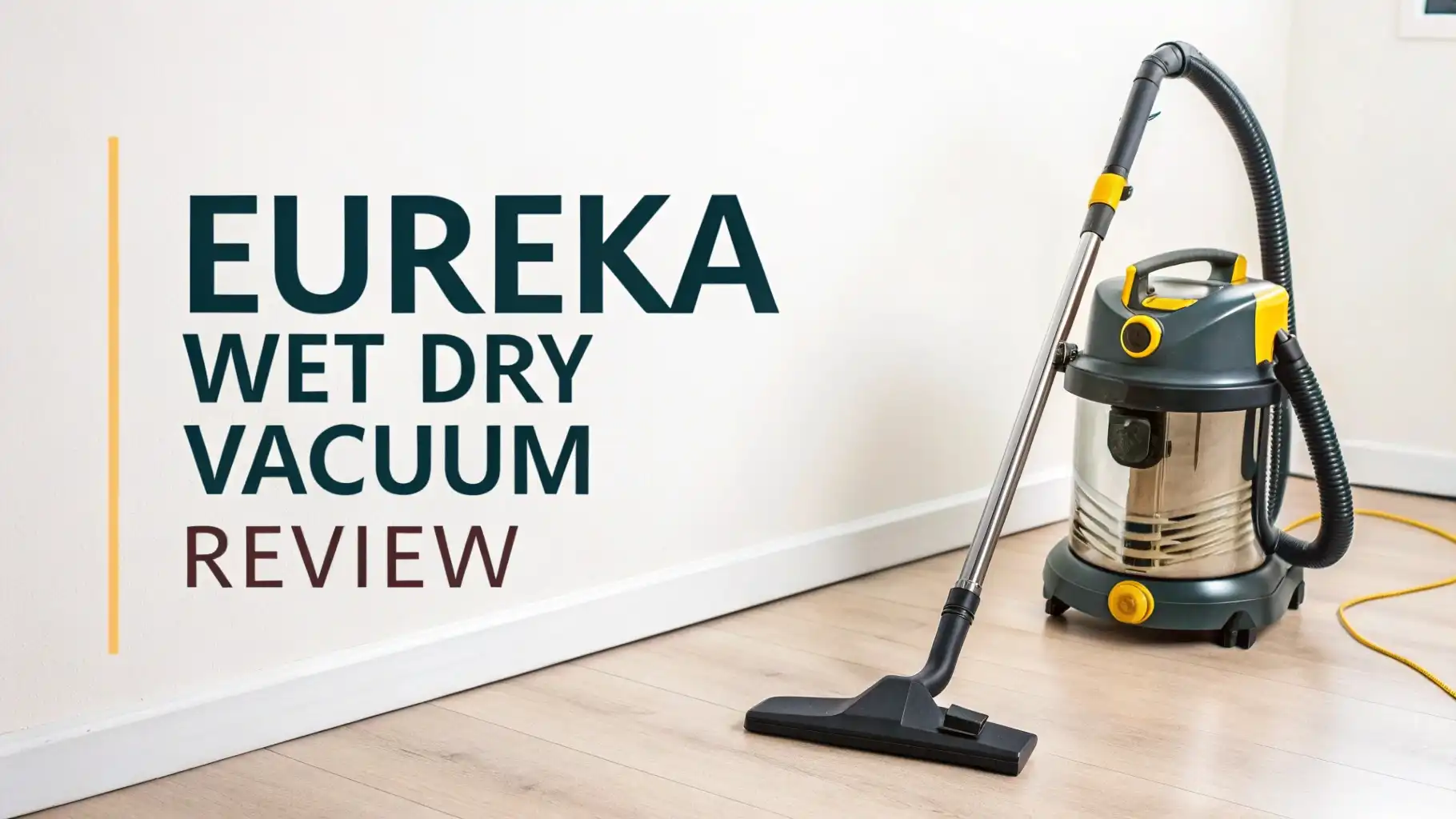
Eureka Wet Dry Vacuum Review: Your Complete Guide
Keeping your floors spotless can feel like a never ending battle. You vacuum up the dirt, then grab a mop for sticky spills. Two tools, double the work, twice the storage space. Eureka wet dry vacuums promise to change all that. These innovative cleaning machines combine vacuuming and mopping into one simple step.
But do they really deliver on that promise? This detailed review examines everything you need to know about Eureka’s wet dry vacuum lineup. You’ll discover which model fits your home, how they compare to competitors, and whether these cleaning tools are worth your money. Get ready to transform your floor cleaning routine forever.

Key Takeaways:
Before diving into the details, here are the most important facts about Eureka wet dry vacuum cleaners that every buyer should know:
Dual Function Cleaning: Eureka wet dry vacuums eliminate the need for separate tools. They vacuum and mop simultaneously, cutting your cleaning time in half. You pick up debris and wash floors in one pass.
Self Cleaning Technology: Most Eureka models feature automatic self cleaning systems. The machine flushes its own tubes and brush rolls after each use. You spend less time maintaining your vacuum and more time enjoying clean floors.
Cordless Convenience: Popular models like the NEW400 and RapidWash series run on rechargeable batteries. You get 30 to 40 minutes of runtime without tangling cords. Move freely from room to room without searching for outlets.
Budget Friendly Pricing: Eureka positions itself as an affordable alternative to premium brands. Most models cost between $199 and $499. You get professional grade cleaning without breaking your budget.
Dual Tank System: Separate tanks for clean and dirty water prevent cross contamination. You always apply fresh cleaning solution to your floors. The dirty water stays contained until you empty it.
Hard Floor Focus: These vacuums work best on hard surfaces like tile, hardwood, laminate, and vinyl. Some models handle low pile rugs, but they’re not designed for deep carpet cleaning.
Understanding Eureka Wet Dry Vacuum Technology

- SELF PROPELLED FUNCTION FOR EASY MANEUVERABILITY: EUREKA NEW400 vacuum mop makes cleaning and movement easier than ever before. The self-propelled function...
- SAVES TIME AND EFFORT: Vacuum and wash at the same time. EUREKA NEW400 cordless floor washer Is an effective way to clean wet and dry messes on multiple sealed...
- CONTINUOUS RUNNING WATER CLEANING: Eureka’s dual-tank system keeps clean and dirty water separate, you’re always cleaning with fresh water. No more pushing...
Eureka wet dry vacuums represent a significant shift in home cleaning technology. Traditional cleaning required two separate steps. First, you vacuumed to remove dry debris. Then you mopped to handle spills and sticky residue. This approach wasted time and energy.
The wet dry vacuum combines both functions into one machine. Powerful suction motors pull up dirt, dust, and larger particles. At the same time, the machine sprays cleaning solution onto your floor. A rotating brush roll scrubs the surface while suction removes dirty water. This simultaneous action delivers better results in less time.
The technology relies on several key components working together. The clean water tank holds your cleaning solution. The dirty water tank collects the grime and liquid the machine removes. The brush roll spins at high speeds to agitate and clean. Multiple suction motors provide the power needed for both vacuuming and water extraction.
Eureka’s implementation focuses on simplicity and affordability. They stripped away complex features found in premium brands. What remains are the essential functions most people actually use. This approach keeps costs down while maintaining solid performance.
Eureka NEW400 Wet Dry Vacuum: The Budget Champion
The NEW400 stands as Eureka’s entry level wet dry vacuum. Priced around $199, it delivers impressive value for budget conscious buyers. This model proves you don’t need to spend $500 for effective floor cleaning.
The 120W motor provides sufficient suction for everyday messes. It handles pet hair, tracked in dirt, and kitchen spills with ease. The dual tank system holds 0.6 liters of clean water and 0.5 liters of dirty water. That’s enough capacity to clean most average sized homes without refilling.
Battery life reaches approximately 30 minutes on a single charge. You’ll cover about 1,000 to 1,500 square feet depending on how dirty your floors are. The battery takes three to six hours to fully recharge. This makes it practical for daily quick cleans rather than marathon cleaning sessions.
The self cleaning cycle runs for about 40 seconds after each use. You place the vacuum on its charging dock, press a button, and it flushes the internal tubes and brush roll. This feature prevents odors and bacteria buildup that plagued older wet vacuum models.
Weight comes in at a manageable 8.7 pounds. Most users find it easy to maneuver around furniture and up stairs. The self propelling feature reduces the effort needed to push it forward. You guide the vacuum rather than pushing its full weight.
The NEW400 works best on sealed hard floors. It excels on tile, sealed hardwood, laminate, and vinyl. You can use it on area rugs and low pile carpets, but results vary. Deep pile carpets will not dry properly and may develop mold issues.
Eureka NEW500: Smart Features for Tech Savvy Cleaners

- ALL-IN-ONE CORDLESS VACCUM MOP: NEW500 cordless one-step vacuum mop that vacuums up debris and washes at the same time, saves your time and effort. It tackles...
- CORDLESS CONVENIENCE & POWERFUL CLEANING: Supercharged lithium-ion battery provides up to 35 minutes of effective run time. NEW500 wet dry vacuum combines the...
- XL TWO TANK SYSTEM: NEW500’s two-tank system with 750ML clean water tank and 600ML dirty water tank, means you are always cleaning with fresh water, while...

The NEW500 builds on the NEW400 foundation with added technology. Priced around $299, it includes voice prompts and smart dirt detection. These features justify the $100 price increase for some buyers.
Voice prompts guide you through operation and maintenance. The vacuum tells you when tanks are full, when the battery runs low, and when it’s time for cleaning. This auditory feedback helps prevent common user errors. You won’t accidentally continue cleaning with a full dirty water tank.
Smart dirt detection adjusts suction power based on floor conditions. Sensors detect when you encounter heavily soiled areas. The machine automatically increases power to handle tougher messes. When floors are relatively clean, it reduces power to extend battery life.
The NEW500 maintains the same 30 minute battery life as the NEW400. Some users hoped the extra cost would include better battery performance. Unfortunately, runtime remains identical. The recharge time also stays at three to six hours.
Tank capacities match the NEW400 at 0.6 liters clean and 0.5 liters dirty. The physical design looks nearly identical. The main differences lie in the electronic features rather than mechanical improvements.
Build quality feels slightly more premium than the NEW400. The materials seem more durable. Several long term users report the NEW500 withstanding daily use better than the budget model. Whether this justifies the higher price depends on your usage frequency.
Eureka RapidWash Series: Premium Performance
The RapidWash lineup represents Eureka’s premium tier. Models like the NEW430 and NEW730 cost between $299 and $499. They deliver enhanced performance and durability for demanding cleaning situations.
Suction power increases significantly in RapidWash models. The NEW430 offers 15,000Pa of suction compared to the NEW400’s more modest power. This translates to better pickup of embedded dirt and faster water extraction. Your floors dry noticeably faster.
Weight drops to approximately 8.16 pounds in the RapidWash series. That’s 6% lighter than the NEW400 despite increased power. Eureka achieved this through improved motor efficiency and lighter frame materials. The reduced weight makes a real difference during longer cleaning sessions.
Battery performance improves to 40 minutes in some RapidWash models. The extra 10 minutes allows you to clean larger homes without stopping to recharge. Some models include fast charging capabilities that reduce wait times to under three hours.
The RapidWash series includes edge cleaning technology. Special brush designs reach right up to baseboards and into corners. Traditional wet dry vacuums leave a small gap along walls. RapidWash models minimize this gap for more thorough coverage.
Tangle free brush rolls prevent hair from wrapping around the roller. Pet owners particularly appreciate this feature. You spend less time cutting hair off the brush and more time actually cleaning. The brush roll remains efficient even with heavy pet hair accumulation.
Top 3 Alternatives for Eureka Wet Dry Vacuum
While Eureka offers excellent value, several competitors deserve consideration. These alternatives provide different features and price points that might better suit your specific needs.

- Vacuum and Mop in One Step - Clean up wet or dry messes and easily tackle tough and sticky messes in one step, no need to sweep and then mop like traditional...
- Fresh Water Cleaning –Equipped with Tineco’s innovative flat scraper, it clears away debris and squeezes out dirty water inside to ensure a clean brush...
- Hands-Free Self-Cleaning for Easy Maintenance –The hands-free self-cleaning system automatically cleans from rollers to tubing with one press, so you don't...
Tineco iFLOOR 5 Breeze leads the alternative options. This cordless wet dry vacuum costs around $199, matching Eureka’s entry level pricing. It features a simplified one step cleaning process and excellent edge cleaning capabilities. The iFLOOR 5 includes a self cleaning system similar to Eureka’s models. Battery life reaches 35 minutes, splitting the difference between Eureka’s models. Build quality feels premium despite the budget price. The main advantage over Eureka is better app integration for tracking cleaning history and maintenance schedules.

- CORDLESS COMBO VAC & MOP. Effortlessly vacuum and mop wet or dry messes in one go. Get up to 30 minutes of uninterrupted, all-in-one cleaning.
- VACUUM ONLY MODE. Easily convert to power vacuum mode for more suction for dirt, crumbs and fur pickup.
- MULTI-SURFACE AVAILABLE. Safely clean hard floors like tile, sealed wood, and laminate while revitalizing rugs, ensuring spotless and refreshed surfaces across...
Bissell CrossWave OmniForce offers a unique dedicated dry vacuum mode. Priced around $169, it costs less than most Eureka models while adding versatility. You can switch between wet cleaning and dry vacuuming without changing tools. This makes it practical for quick daily vacuuming between wet cleaning sessions. The OmniForce includes two separate brush rolls optimized for different cleaning tasks. Tank capacity exceeds Eureka models at 0.82 liters clean water. The trade off comes in weight at 11.5 pounds, making it heavier to maneuver.

- CUT YOUR CLEANING TIME IN HALF – Vacuum and wash at the same time. The cordless floor washer is an effective way to clean wet and dry messes on multiple...
- ALWAYS CLEAN WITH FRESH WATER – The dual-tank system keeps clean and dirty water separate, so you’re always cleaning with fresh water and solution.
- FAST AND STREAK-FREE DRYING – With up to 90% water recovery rate, iFLOOR 2 Complete leaves your floors completely dry and streak-free in a matter of minutes.
Tineco iFLOOR 2 provides a budget option below Eureka’s pricing. At approximately $169, it offers basic wet dry functionality without advanced features. This model works well for small apartments or as a second vacuum for upper floors. Battery life reaches 25 minutes, enough for smaller spaces. The simplified design means fewer parts to maintain and replace. It lacks self cleaning and smart features but excels at core vacuuming and mopping tasks. The iFLOOR 2 suits buyers who want to try wet dry technology without major investment.
Performance on Different Floor Types
Eureka wet dry vacuums shine on sealed hard surfaces. Tile floors represent the ideal use case. The vacuum picks up debris from grout lines while the mop function scrubs surface stains. Sealed ceramic and porcelain tiles dry quickly after cleaning. The combination of suction and scrubbing removes stuck on food and dirt that traditional mopping misses.
Hardwood floors require more caution. Eureka models work safely on properly sealed hardwood. The quick drying action prevents water damage that traditional mopping can cause. However, unsealed or damaged hardwood should never be cleaned with wet dry vacuums. Always check your floor’s condition before using any wet cleaning method.
Laminate flooring handles Eureka vacuums well. Modern laminate resists water better than older versions. The fast water extraction prevents seepage into seams. Keep the vacuum moving to avoid dwelling on one spot too long. Most users report excellent results on laminate with no warping or damage.
Vinyl and LVP (luxury vinyl plank) represent perfect surfaces for Eureka vacuums. These materials resist water completely. You can clean as aggressively as needed without worry. The textured surfaces of many vinyl products trap dirt that dry vacuuming alone can’t remove. Wet dry vacuums excel here.
Area rugs and low pile carpets show mixed results. The NEW400 and NEW500 struggle with anything beyond thin rugs. RapidWash models handle low pile better but still can’t replace dedicated carpet cleaners. The machines extract most water but rugs take hours to fully dry. This makes them impractical for homes with extensive carpeting.
High pile carpet and shag rugs should be avoided completely. Eureka wet dry vacuums lack the power to properly clean and extract water from deep carpet. Using them on thick carpet risks mold growth and unpleasant odors. Stick to hard floors and very low pile rugs for best results.
Maintenance Requirements and Costs
Eureka wet dry vacuums demand regular maintenance to perform well. Understanding these requirements helps you avoid common problems and extend machine life.
After every use, you should run the self cleaning cycle. This takes 40 seconds and prevents bacterial growth in the tubes and brush roll. Empty both water tanks even if they’re not completely full. Rinse the dirty water tank with clean water. Leave tank covers open to air dry between uses.
Weekly cleaning involves removing the brush roll for manual inspection. Hair and debris can accumulate despite the self cleaning feature. Pull off any wrapped materials. Check the brush roll for damage or excessive wear. Rinse the filter screen under running water and let it dry completely before reinstalling.
Monthly deep cleaning requires disassembling accessible parts. Remove and clean the nozzle where solution sprays onto the floor. Mineral deposits from hard water can clog these openings. Use white vinegar to dissolve buildup. Inspect the suction pathways for blockages. Pet hair often accumulates in unexpected places.
Solution costs vary based on usage. Eureka sells proprietary cleaning solution at approximately $15 per liter. Each liter provides about 10 to 15 cleaning sessions depending on floor area. Many users successfully use diluted alternatives like Bona or Murphy Oil Soap. Always test alternatives on a small area first to ensure compatibility.
Replacement parts remain reasonably priced. Brush rolls cost around $25 and last 6 to 12 months with regular use. Filters run $15 to $20 and need replacement every 3 to 6 months. Batteries eventually degrade, with replacements costing $60 to $80. Most users get 2 to 3 years before battery replacement becomes necessary.
Annual maintenance costs typically range from $50 to $100 if you perform the work yourself. Add another $50 to $100 if you need professional service for issues you can’t resolve. This compares favorably to traditional vacuum maintenance plus mop replacement costs.
Battery Life and Charging Considerations
Battery performance critically affects wet dry vacuum usability. Understanding the limitations helps set realistic expectations.
Eureka’s standard 30 minute runtime suits most small to medium homes. This covers approximately 1,000 to 1,500 square feet of hard flooring. Large homes exceeding 2,000 square feet may require mid cleaning recharges. Plan your cleaning route to maximize efficiency.
Power modes affect battery life significantly. Eureka models typically offer two or three power settings. High mode delivers maximum suction but drains batteries in 15 to 20 minutes. Standard mode balances power and runtime at the advertised 30 minutes. Eco mode extends runtime to 35 to 40 minutes but may struggle with stubborn messes.
The 3 to 6 hour recharge time frustrates users who need to clean large areas in one session. You can’t simply swap in a fresh battery like with some cordless stick vacuums. Eureka doesn’t sell spare batteries as separate accessories. This limitation forces you to schedule cleaning sessions around charging times.
Battery degradation follows typical lithium ion patterns. New batteries deliver full runtime. After 300 to 500 charge cycles, runtime drops to 70% to 80% of original capacity. By year two or three, you might see only 20 to 25 minutes per charge. Heavy daily users experience faster degradation than occasional weekly users.
Charging dock design varies by model. Basic models include simple plugs. Premium RapidWash models feature docking stations that also facilitate self cleaning. Always store the vacuum on its charger between uses. This maintains battery health and ensures the vacuum is ready when needed.
Cold weather affects battery performance. Using Eureka vacuums in unheated garages or basements during winter reduces runtime. Batteries perform best at room temperature. Store the vacuum in climate controlled areas when possible.
Real User Experiences and Common Complaints
Analyzing hundreds of user reviews reveals consistent patterns in satisfaction and frustration.
Positive feedback centers on convenience and time savings. Users love combining two cleaning steps into one. Many report cutting floor cleaning time by 50% or more. The self propelling feature gets frequent praise from users with mobility issues or large homes.
Pet owners consistently rate Eureka wet dry vacuums highly. The machines handle pet hair better than many expected. Daily quick cleans prevent hair accumulation. The mopping function removes paw prints and food spills that dry vacuuming alone can’t address.
Negative reviews most often cite battery life disappointments. Users with large homes find 30 minutes insufficient. The inability to swap batteries forces them to clean in multiple sessions. Some purchased a second vacuum rather than waiting for recharging.
Weight complaints appear less frequently than expected. Most users find the 8 to 9 pound weight manageable. However, users with mobility limitations sometimes struggle. Carrying the vacuum upstairs poses challenges for some elderly users.
Build quality concerns emerge after 6 to 12 months of heavy use. Plastic components crack or break on some units. The brush roll housing cracks more frequently than other parts. Eureka’s warranty covers these issues but the replacement process frustrates customers. Some wait weeks for parts.
Noise levels generate mixed reactions. The vacuums produce 70 to 75 decibels during operation. This falls between a normal conversation and a traditional vacuum cleaner. Some find it acceptable while others expected quieter performance from modern cordless designs.
Drying time on floors satisfies most users. Hard surfaces typically dry in 2 to 5 minutes. Area rugs take 30 minutes to 2 hours depending on thickness. A few users report floors remaining slightly damp after cleaning. This often indicates incorrect technique rather than machine failure.
Comparing Eureka to Premium Brands
Eureka competes primarily on price, but how does performance stack up against premium alternatives?
Tineco Floor One S7 Pro represents the premium market leader at $599 to $699. It offers 20,000Pa suction compared to Eureka’s 15,000Pa maximum. The difference shows in deep cleaning power and water extraction speed. Tineco floors dry faster. However, the price premium of $300 to $400 over Eureka models is substantial.
Advanced features separate premium brands from Eureka. Tineco includes app connectivity, cleaning reports, and maintenance alerts. The S7 Pro has obstacle detection sensors that prevent bumping into furniture. It self adjusts brush roll speed based on detected floor type. These convenience features don’t necessarily clean better but improve user experience.
Bissell CrossWave models compete directly with Eureka in the mid range market. Prices overlap significantly. Bissell emphasizes carpet cleaning capability while Eureka focuses on hard floors. If your home includes more carpet, Bissell may serve you better. For predominantly hard floors, Eureka offers equal or better value.
Shark HydroVac models fall between Eureka and Tineco in price and features. They cost $50 to $100 more than equivalent Eureka models. Shark provides better edge cleaning and slightly longer battery life. Whether these improvements justify the cost depends on personal priorities.
Durability comparisons favor premium brands long term. Tineco and Shark owners report fewer failures after 2 to 3 years of use. Eureka models show higher failure rates in the same timeframe. However, Eureka’s lower initial cost means you could replace a failed unit and still spend less than buying premium initially.
Warranty coverage varies significantly. Eureka typically offers 1 year limited warranties. Premium brands often provide 2 years. Extended warranties cost extra across all brands. Consider whether saving $200 to $300 upfront justifies potentially shorter lifespan and warranty coverage.
Best Practices for Using Eureka Wet Dry Vacuums
Proper technique maximizes cleaning results and extends machine life.
Pre vacuum dry debris if floors are heavily soiled. While Eureka vacuums handle mixed debris, extremely dirty floors challenge the system. A quick pass with a regular vacuum removes large items and reduces strain on the wet system.
Fill the clean water tank with the recommended amount of cleaning solution. Too much solution creates excessive suds that clog the system. Too little reduces cleaning effectiveness. Follow manufacturer ratios carefully. Most users find the pre marked fill lines accurate.
Start at the back of each room and work toward the exit. This prevents walking on freshly cleaned wet floors. Plan your path to minimize retracing steps. The self propelling feature works best when moving forward consistently.
Use overlapping passes to ensure complete coverage. Each pass should overlap the previous by about 2 inches. This prevents streaking and ensures the brush roll scrubs all floor areas. Rushed cleaning that misses spots defeats the purpose of wet cleaning.
Move at a steady pace, neither too fast nor too slow. Most manufacturers recommend about 1 foot per second. Too fast prevents proper scrubbing. Too slow over saturates floors. Find a rhythm that feels natural and maintains even progress.
Pay extra attention to high traffic areas. Kitchen floors near sinks and stoves need slower passes. Entryways where outdoor dirt accumulates require additional scrubbing. The smart dirt detection on NEW500 models handles this automatically.
Empty the dirty water tank when it reaches the fill line even if you haven’t finished cleaning. Overfilling reduces suction efficiency and can cause spills. Keep a bucket handy for mid session emptying if you’re cleaning large areas.
Run the self cleaning cycle immediately after finishing. Don’t let dirty water sit in the system. The 40 second cycle prevents most odor and bacteria issues that plague users who skip this step.
Store with tanks open to air dry. Sealing moisture inside tanks creates perfect conditions for mold and mildew. Leave tank covers off until completely dry, then close before next use.
Troubleshooting Common Issues
Even well maintained Eureka vacuums occasionally develop problems. Most issues have simple solutions.
Reduced suction usually indicates a clog or full dirty water tank. Empty the tank first. If suction doesn’t improve, check the filter screen for debris. Remove and rinse under water. Inspect the brush roll area for wrapped hair or objects blocking airflow. Clean the nozzle where solution sprays out.
Streaky floors result from insufficient cleaning solution or dirty brush rolls. Check that you added solution to the clean water tank. Inspect the spray nozzle for clogs. Remove and manually clean the brush roll. Old worn brush rolls also cause streaking and need replacement.
Excessive water on floors indicates the vacuum isn’t extracting properly. The dirty water tank may be full even if it doesn’t look it. Empty completely. Check that all tank seals properly connect. Damaged seals prevent proper suction. Slow your cleaning pace to allow more extraction time.
Battery draining faster than expected suggests age or usage mode issues. Confirm you’re using the correct power mode for your needs. High mode always drains quickly. If the battery is over 2 years old, degradation is normal. Contact Eureka about replacement options.
Unusual noises often mean objects stuck in the brush roll area. Power off and check for debris. Small toys, coins, or hard objects jam the mechanism. Remove obstructions carefully. Grinding noises may indicate motor bearing issues requiring professional service.
Won’t power on typically relates to charging problems. Verify the charger properly connects to both the vacuum and wall outlet. Try a different outlet. Check that the charging contacts on the vacuum are clean and not corroded. If the battery completely discharged, it may need 30 minutes of charging before it will power on.
Foul odors develop when users skip self cleaning cycles or don’t dry tanks properly. Run the self cleaning cycle three times in a row with just clean water. Empty and rinse both tanks. Fill the clean tank with 1 cup white vinegar and 2 cups water. Run a cleaning session on a small area, then do the self cleaning cycle. This usually eliminates odors.
Cost Analysis: Is Eureka Worth the Investment?
Breaking down total ownership costs reveals whether Eureka vacuums deliver value.
Initial purchase for entry level NEW400 costs approximately $199. Mid range NEW500 runs $299. Premium RapidWash models reach $499. Compare this to $150 for a decent traditional vacuum plus $50 for a quality mop. The combined $200 makes Eureka NEW400 price competitive.
Cleaning solution costs about $15 per liter at retail. Each liter lasts 10 to 15 sessions. Heavy users (daily cleaning) spend roughly $75 annually. Weekly users spend closer to $20 yearly. Generic alternatives cut costs to $10 to $15 annually.
Replacement parts over 3 years include 2 brush rolls at $25 each and 4 filters at $18 each. Total: $122. One battery replacement at year 3 adds $70. Three year parts cost: approximately $192 or $64 annually.
Total 3 year ownership for a NEW400 equals $199 plus $225 solution (heavy use) plus $192 parts equals $616. That’s $205 annually. A traditional vacuum at $150 lasts about 5 years ($30 annually). A quality mop with yearly replacement ($50 annually) plus floor cleaner ($40 annually) totals $120 yearly. Combined traditional method: $150 annually.
The Eureka premium costs about $55 more per year than traditional methods. However, this doesn’t account for time savings. If Eureka cuts your cleaning time by 50%, that’s significant value. A typical home requires 30 to 45 minutes weekly for vacuuming and mopping separately. Eureka reduces this to 15 to 25 minutes. That’s 70 to 100 hours saved over three years.
Resale value for used Eureka vacuums remains minimal. Most sell for $50 to $75 after 2 years. Factor this as a small offset against total costs. The limited resale market means you should view these as consumable items rather than durable investments.
Opportunity cost matters too. The $199 to $499 purchase price could earn approximately 4% to 5% in a high yield savings account. That’s $8 to $25 annually in foregone interest. Small but worth noting for comprehensive analysis.
Environmental Impact and Sustainability
Modern consumers increasingly consider environmental factors in purchase decisions.
Eureka wet dry vacuums eliminate disposable mop pads and cleaning wipes. A traditional mop user might go through 100 to 200 disposable pads annually. These contribute to landfill waste. Eureka’s reusable roller and washable filters reduce this waste significantly.
However, battery disposal presents environmental concerns. Lithium ion batteries require special recycling. Most users don’t properly recycle batteries when replacing them. Eureka provides limited guidance on battery disposal. This remains an area needing improvement.
Plastic construction throughout Eureka vacuums raises durability and recyclability questions. The machines use various plastic types that complicate end of life recycling. Few municipal programs accept these mixed plastic appliances. Most ended Eureka vacuums end up in landfills.
Energy consumption remains relatively low. Charging a Eureka battery uses about 0.05 to 0.08 kWh per full charge. At average US electricity rates, that’s less than 1 cent per charge. Annual electricity costs stay under $5 even with daily use.
Water usage actually increases slightly versus traditional mopping. Each cleaning session uses 0.6 liters of water. Traditional mopping typically uses 3 to 4 liters but cleans more square footage per refill. Overall water consumption comes out roughly equal when adjusted for floor area covered.
Cleaning solution chemicals impact varies by choice. Eureka’s proprietary solution contains mild surfactants and fragrances. It’s not certified biodegradable or eco friendly. Users wanting greener options can substitute certified green cleaners. This flexibility allows environmentally conscious users to reduce chemical impact.
Manufacturing impacts remain largely unknown. Eureka doesn’t publish detailed sustainability reports or carbon footprint information for their vacuum line. The vacuums are manufactured overseas with limited transparency into labor and environmental practices.
Future of Wet Dry Vacuum Technology
Eureka and competitors continue developing new features and capabilities.
Longer battery life tops consumer wish lists. Current 30 to 40 minute runtimes limit whole home cleaning in larger houses. Industry insiders suggest 60 minute batteries may arrive within 2 years. Improved battery chemistry and more efficient motors make this achievable.
Faster charging would dramatically improve usability. Quick charge technology that delivers 80% capacity in 30 to 45 minutes would help large home owners. Some competitors already offer this. Eureka will likely add fast charging to premium models soon.
Better carpet performance remains a development focus. Current models work primarily on hard floors. Expanding capability to handle medium pile carpets would broaden market appeal. This requires more powerful suction and better water extraction than current designs provide.
Smart home integration will likely expand. Current models offer minimal connectivity. Future Eureka vacuums might integrate with Amazon Alexa or Google Assistant. Voice commands, automated scheduling, and maintenance alerts through smart speakers could enhance convenience.
Improved dirt sensors could optimize cleaning automatically. Current smart detection on the NEW500 represents basic implementation. More sophisticated sensors might map floor dirtiness and adjust not just power but also cleaning pattern suggestions.
Modular battery design would address the replacement cost issue. Current batteries integrate deeply into vacuum construction. Future designs might feature easily swappable batteries that users can replace without tools. This would extend vacuum lifespan and reduce electronic waste.
UV sanitizing features could differentiate premium models. Some robot vacuums already include UV lights to kill bacteria on floors. Adding this to wet dry vacuums would appeal to health conscious consumers, especially post pandemic.
Making Your Purchase Decision
With all this information, how do you actually choose?
Buy the NEW400 if you have a small to medium home (under 1,500 square feet) with mostly hard floors. You want basic wet dry functionality without paying for features you won’t use. Your budget maxes out around $200. You clean once or twice weekly rather than daily.
Choose the NEW500 if you value voice guidance and want smart dirt detection. The $100 premium over NEW400 gets you these convenience features. You have young children or pets that create variable mess levels requiring adaptive cleaning power. You prefer technology that helps prevent user errors.
Invest in RapidWash models if you have a larger home exceeding 2,000 square feet. You need maximum suction power for embedded dirt and faster drying. You clean daily or multiple times weekly and need durable construction. Edge cleaning capability matters because you have extensive baseboards and corners.
Consider alternatives if you need true carpet cleaning capability beyond low pile rugs. Your home includes stairs and you want something lighter than 8 pounds. You require longer than 40 minutes battery life per session. You prefer established brands with longer warranty coverage.
Skip wet dry vacuums entirely if you have mostly high pile carpet or rugs. You live in a very small space (under 500 square feet) where traditional methods work fine. You’re physically unable to manage an 8 to 9 pound machine. You rarely clean floors thoroughly.
Test before buying if possible. Some retailers allow in store demonstrations. Big box stores sometimes have floor models. Feel the weight, test the self propelling feature, and check if the handle height suits your frame. Reviews provide information but hands on experience reveals personal fit.
Watch for sales around Black Friday, Prime Day, and other major shopping events. Eureka vacuums regularly see 20% to 30% discounts during these periods. Patience can save $50 to $150 versus paying full retail price.
Frequently Asked Questions
How long do Eureka wet dry vacuums last with regular use?
Eureka wet dry vacuums typically last 2 to 4 years with regular use. Heavy daily use pushes components harder and results in shorter lifespans around 2 to 3 years. Users who clean once or twice weekly often get 4 to 5 years before major component failures. Battery degradation usually occurs first, around year 2 to 3. Motor failures happen less frequently but usually around year 3 to 4. Proper maintenance including regular self cleaning cycles and brush roll care extends lifespan. Some users report 5 plus years but this represents exceptional cases rather than typical experience.
Can I use my own cleaning solution instead of Eureka brand?
Yes, you can use alternative cleaning solutions in Eureka wet dry vacuums. Many users successfully use diluted Bona Hardwood Floor Cleaner, Murphy Oil Soap, or basic dish soap solutions. Mix solutions weaker than you would for traditional mopping since the vacuum uses less water. Avoid solutions with heavy fragrances or oils that might clog spray nozzles. Never use bleach or ammonia based cleaners as these damage internal seals and tubes. Test any alternative solution on a small floor area first to ensure it doesn’t cause excessive foaming. Excessive suds can overwhelm the vacuum’s collection system and cause spills.
Do Eureka wet dry vacuums work on unsealed hardwood floors?
No, never use Eureka wet dry vacuums on unsealed hardwood floors. Unsealed wood absorbs water which causes warping, cupping, and permanent damage. Even sealed hardwood requires caution. Verify your floors have intact polyurethane or wax sealing before using any wet cleaning method. Check high traffic areas and spots near entryways where sealing often wears thin. If water droplets bead up rather than soaking in, your floors are properly sealed. When in doubt, consult a flooring professional before wet cleaning any hardwood surface. Damage from improper wet cleaning is expensive to repair and often not covered by warranties.
How often should I replace the brush roll and filters?
Replace brush rolls every 6 to 12 months depending on usage frequency. Daily users should replace every 6 months. Weekly users can stretch to 10 to 12 months. Signs that brush rolls need replacement include visible wear on bristles, reduced scrubbing effectiveness, and streaky floors after cleaning. Filters need replacement every 3 to 6 months. Monthly rinsing helps filters last longer but eventually they lose effectiveness. If you notice reduced suction even after cleaning the filter, replacement is overdue. Keep spare parts on hand so you can replace immediately when performance drops rather than waiting for shipping.
Can these vacuums handle liquid spills like knocked over drinks?
Yes, Eureka wet dry vacuums effectively clean liquid spills. They excel at this task actually. For large spills, make one or two passes without activating the cleaning solution spray. This picks up the bulk liquid. Then activate the solution spray and make additional passes to clean any sticky residue. Empty the dirty water tank more frequently when handling large spills to maintain suction power. The vacuums work especially well on juice, soda, wine, and coffee spills that would normally require extensive mopping. Pet accident cleanup also works well though you may want to pre treat with an enzyme cleaner first.
Is the self cleaning feature truly effective or just marketing?
The self cleaning feature works effectively but has limitations. It successfully flushes the main water pathway and loosens debris from the brush roll. This prevents the worst buildup and odor issues that plagued older wet vacuum designs. However, it doesn’t eliminate manual maintenance entirely. You still need to remove the brush roll monthly for deep cleaning. Hair and debris accumulate in areas the self cleaning doesn’t reach. Think of it as an automatic dishwasher it handles daily cleaning but you still need to occasionally hand wash tough spots. Users who rely solely on self cleaning without manual maintenance experience odor problems around month 3 to 4.
What’s the return policy if I’m not satisfied with my Eureka vacuum?
Return policies depend on where you purchase. Amazon typically offers 30 day returns for vacuum cleaners with free return shipping. Target and Walmart provide similar 30 to 90 day return windows. Save your original packaging for the return period since most retailers require it. Test your vacuum within the first week to identify any issues while return is easiest. Eureka’s direct website sales include a 30 day money back guarantee. Refurbished or clearance units often have restricted return policies. Always verify return terms before purchasing. Open box purchases from retailers may have reduced return windows of 14 days or be final sale.
How does the warranty work for repairs and replacements?
Eureka wet dry vacuums include a 1 year limited warranty from purchase date. This covers manufacturing defects and component failures under normal use. User damage, improper cleaning solution, or failure to maintain the vacuum void the warranty. Register your vacuum on Eureka’s website immediately after purchase to ensure warranty coverage. When issues arise, contact Eureka customer service with your model number and proof of purchase. They typically troubleshoot over phone or email first. For covered issues, they ship replacement parts or provide prepaid shipping for the entire unit. Turnaround time averages 2 to 3 weeks. Extended warranties are available through some retailers at additional cost.
Can I replace the battery myself when it degrades?
Battery replacement difficulty varies by model. NEW400 and NEW500 models have integrated batteries not designed for user replacement. Technically skilled users can disassemble the vacuum and replace the battery, but this voids warranty and requires specific tools. Eureka recommends professional service for battery replacement which costs $80 to $120 including labor. Some RapidWash models have more accessible battery compartments but still require partial disassembly. Third party replacement batteries are available online for $40 to $60 but quality varies significantly. Using non Eureka batteries voids warranty and may present safety risks. Plan to either pay for professional battery replacement or replace the entire vacuum around year 3.
Are these vacuums suitable for commercial or business use?
Eureka wet dry vacuums are designed for residential use and struggle in commercial settings. The 30 to 40 minute battery life can’t handle large commercial floor areas. The duty cycle isn’t rated for continuous daily use that commercial cleaning requires. Tank capacities are too small for efficient commercial operation. However, small businesses like boutiques or small offices under 1,000 square feet might find them adequate. Hair salons, small restaurants, and similar businesses with limited hard floor area use them successfully. Larger commercial applications need industrial wet dry systems with bigger tanks, longer battery life, and more durable construction. Check Eureka’s commercial line for business rated options if you need frequent heavy use.

Eulalia is a passionate home improvement enthusiast with years of experience testing and reviewing home products to help families make informed purchasing decisions. Through HomeReviewer.blog, she shares honest, detailed reviews and practical guides to create better living spaces for everyone.
Last update on 2026-02-02 / Affiliate links / Images from Amazon Product Advertising API


