Pampered Chef Stoneware Cookie Sheet Review 2026: Worth It?
If you bake cookies every week, you know the struggle. The bottoms burn. The edges spread too thin. The centers stay raw. A good baking sheet fixes all of this, and the Pampered Chef stoneware cookie sheet has a loyal following for exactly that reason. This review covers everything you need to know about this stone baking sheet in 2026.
I looked at the design, the heating behavior, the care routine, real user feedback, and the price. You will learn how it performs, what goes wrong, and whether it deserves a place in your kitchen. By the end, you can decide with confidence.
Key Takeaways
- The stone absorbs heat and holds it. This block of dense ceramic soaks up oven heat and releases it slowly, so cookies bake with golden bottoms and soft centers. Metal pans heat fast, but they also spike and cool quickly, which leads to uneven results.
- It needs no preheat. You place the sheet in a cold oven, and it warms up with the oven. This simple step saves time, protects the stone from thermal shock, and still delivers even cooking from edge to edge.
- Seasoning builds naturally with each use. The unglazed surface collects oil from food, and every bake adds a thin layer that makes the pan more nonstick. The more you use it, the better it releases.
- Care is simple but specific. You skip the soap, use warm water with a scraper, and always let the stone cool completely before washing. This routine keeps the seasoning intact and the surface smooth.
- It comes with real warnings. Dropping the stone or shocking it with cold water can cause cracks. You must handle it gently, and you should never move it while it is hot.
- It costs more than metal pans. The price starts near seventy five dollars and can exceed one hundred dollars. The investment pays off over years of steady use, and many owners report keeping their stones for decades.
What Is the Pampered Chef Stoneware Cookie Sheet?

Last update on 2026-09-09 / Affiliate links / Images from Amazon Product Advertising API
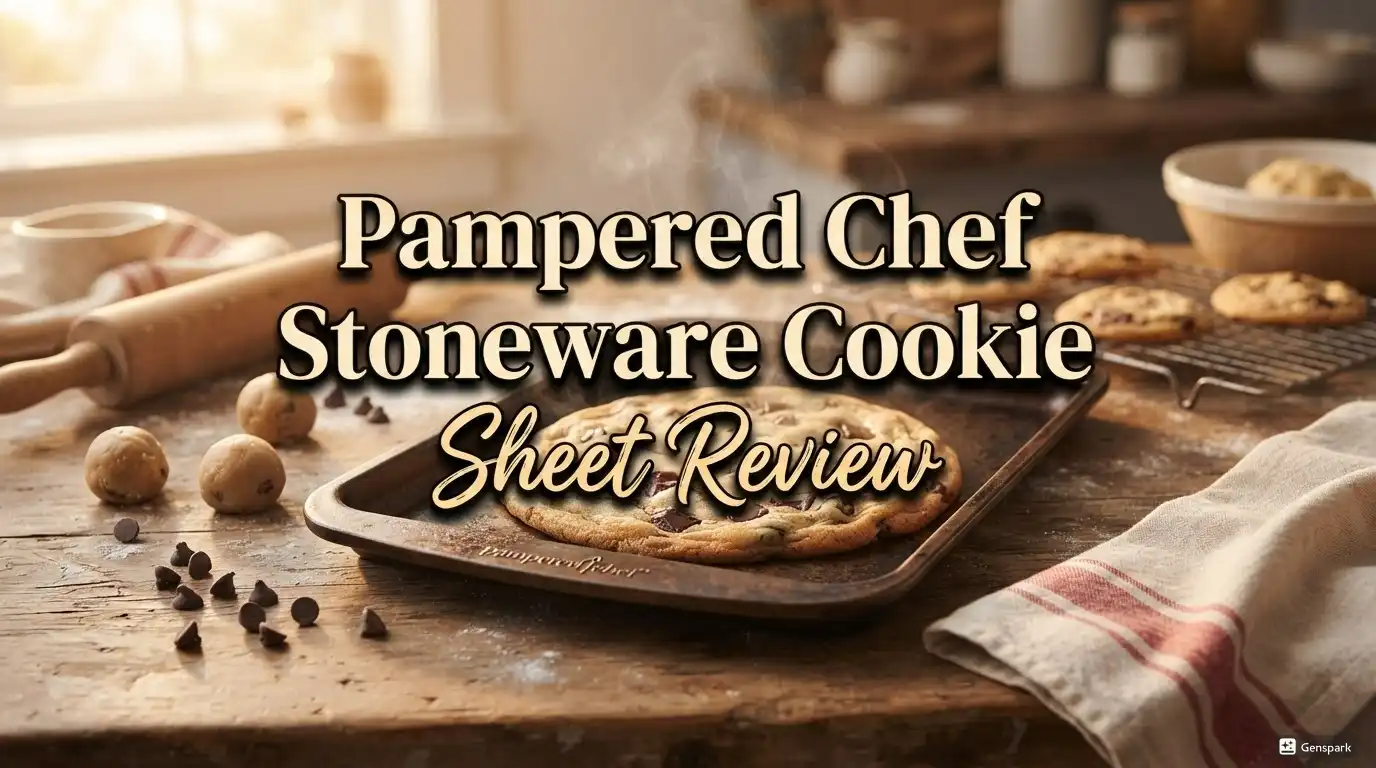
The Pampered Chef stoneware cookie sheet is a flat, unglazed baking surface made from dense ceramic stone. It is sold under several names, including the Rectangle Stone and the Stone Bar Pan. The classic version measures about 12 by 15 inches, and it fits neatly inside a standard home oven. Unlike metal cookie sheets, this product has no coating, no chemicals, and no nonstick spray requirement.
The company fires the stone at high temperature to make a material that is strong, dense, and nearly nonporous. This structure stops the stone from holding onto smells or flavors from previous meals. You can bake cookies one day and roast vegetables the next without any taste transfer.
Pampered Chef positions this sheet as a long term kitchen tool. The brand promises an even bake, a light and crispy texture, and easy release as the stone seasons. It is oven safe and microwave safe, and many owners also use it for pizza, bread, and frozen meals. The stone does not warp, rust, or flake, which are common failures in cheap metal pans. In short, this is a heavy, simple, and durable slab that earns a permanent spot on your counter.
Why Stoneware Beats Metal for Baking Cookies
Metal cookie sheets dominate most kitchens because they are cheap and light. They fail, however, in one critical area. They conduct heat unevenly, so the edges of a pan often run hotter than the center. This difference causes cookies to brown too fast at the rim while the middle stays pale and doughy.
Stoneware solves this problem because it stores heat instead of passing it through. The stone absorbs energy from the oven air and radiates it back evenly across the whole surface. This behavior keeps the bottom of every cookie at the same temperature, no matter where it sits on the sheet. Bakers describe the result as cookies with crispy edges, soft centers, and uniformly golden bottoms.
There is a second advantage. A metal pan can overheat beyond the oven dial setting, because thin metal spikes quickly. The stone, by contrast, stays true to the set temperature. It does not overshoot, so your cookies broil less and bake more evenly. This steadiness reduces the guesswork in recipes and produces repeatable results batch after batch.
Stoneware also absorbs moisture gently. The porous surface pulls a little steam from the dough, which helps batters firm up without drying out. Home cooks notice that biscuits and pizza crusts come out lighter and crispier on stone than on steel. For dedicated cookie bakers, this single difference justifies the switch.
Key Features of the Pampered Chef Stoneware Cookie Sheet

Last update on 2026-09-09 / Affiliate links / Images from Amazon Product Advertising API
The feature list starts with the material itself. The sheet is made of high density, unglazed stoneware that the company fires for durability. The surface is virtually nonporous, which means it resists absorption, staining, and odor buildup over time.
The design is deliberately simple. There are no handles, no lips, no raised edges, and no complicated shapes. A flat slab is easy to slide into a hot oven, easy to scrape, and easy to store upright in a cabinet. The smooth surface also means a spatula glides across it without catching.
The sheet handles high heat without complaint. It is safe in the oven and the microwave, and it tolerates the broiler as well. The stone does not warp under high temperatures, and it will never flake paint or peel coating into your food. This durability supports the manufacturer’s three year guarantee on many bakeware pieces.
Another key feature is the self seasoning surface. You do not oil the stone before baking. Instead, fats from your food build a natural nonstick layer with each session. This process takes time, but it creates a finish that no factory coating can match over the long term.
Finally, the sheet cleans without harsh chemicals. Most owners use hot water and a scraper, and the surface comes clean in seconds. This simplicity makes the stone feel more like a tool and less like a chore.
How the Stone Heats for Even Baking Results
The secret of this cookie sheet lives in its thermal mass. A thick slab of stone absorbs heat slowly, and it releases that heat slowly. This property creates a steady, uniform surface temperature that metal cannot copy.
When you place the cold stone in a cold oven, both warm up together. This smooth rise prevents the thermal shock that can crack ceramic. Once the oven reaches your set temperature, the stone keeps soaking up energy until it matches the oven heat. From that point, the baking surface stays flat and consistent.
The steady heat performs a specific job during baking. It sets the butter in cookie dough quickly, which limits spreading. The result is a thicker cookie with a chewy center and a crisp ring around the edge. Bakers who love soft interiors praise this behavior above all else.
The stone also distributes heat across its corners. Because the material conducts evenly, you can fill the sheet with twelve or more cookies and find no hot spots. This uniformity means you can rotate the pan less, and you can trust that the last cookie bakes as well as the first.
One note matters here. The stone takes longer to heat than metal, but it also holds heat longer. If you bake multiple batches, the stone recovers quickly between loads, so your second and third batches bake just like the first.
Top 3 Alternative for Pampered Chef Stoneware Cookie Sheet

Last update on 2026-09-09 / Affiliate links / Images from Amazon Product Advertising API


Last update on 2026-09-09 / Affiliate links / Images from Amazon Product Advertising API

Last update on 2026-09-09 / Affiliate links / Images from Amazon Product Advertising API
The Pampered Chef stone is a fine choice, but it is not the only option. These three alternatives offer ceramic or stone style baking at different prices, and each one addresses a different buyer.
CasaWare 3 Piece Ultimate Cookie Sheet Set tops the list for versatility. This set gives you two large pans and one medium pan, all with a ceramic nonstick coating. The coating releases food without oil, and the set cleans in seconds. It costs well under fifty dollars, which makes it a strong value for families that bake often. The pans are lighter than stone, so they are easier for older cooks to lift. The tradeoff is that ceramic coated steel does not hold heat like solid stone, so expect slightly softer bottoms.
GreenLife Ceramic Nonstick Half Cookie Sheet offers a budget friendly path. This single half sheet pan measures 18 by 13 inches, so it fits more cookies per batch. The PFAS free ceramic coating gives easy release, and the pan wipes clean by hand. It scores well on price, at about thirty dollars, and it suits bakers who want the ceramic feel without the stone weight. The thin steel core can bump or warp under extreme heat, so watch the temperature.
Hongbake Ceramic Baking Sheet Pan Set delivers the best value for volume bakers. You get three pans in one set, including half sheet, jelly roll, and quarter sizes. The ceramic coated surface releases food easily, and the wide grips make hot pans safe to handle. With thousands of ratings behind it, this set earns consistent praise for even browning at a very low price.
Size, Weight, and How It Fits Your Oven
Size matters more than most buyers expect. The large Pampered Chef stone measures about 15 by 13 inches, and the classic Rectangle Stone comes in at 12 by 15 inches. The smaller bar pans measure 11.5 by 7.75 inches, and they suit toaster ovens and small kitchens.
You must check your oven dimensions before buying. The stone needs at least an inch of clearance on every side so the heat can circulate. A stone that touches the oven walls can block airflow and bake unevenly. Most standard full size ovens accept the 15 inch sheet without a problem. Compact ovens and older models might force you toward the smaller bar pan.
Weight is the biggest surprise for new owners. A full size stone weighs about six to eight pounds, which feels much heavier than a flimsy metal sheet. This mass is the reason the stone heats evenly, but it also makes the pan hard to lift when it is full of hot cookies.
Storage takes planning. The flat sheet stores easily against a cabinet wall or on a shelf, but the heavier stones can strain overhead cupboards. Some owners keep their stones in a lower drawer or on an open rack, where the weight stays manageable and the surface stays visible.
The lack of handles creates one more practical detail. You grip the bare edges with a towel or mitts, and you slide the stone rather than lift it whenever possible. This habit protects both you and the stone.
How to Season Your Stoneware for Nonstick Results
Seasoning turns a plain stone into a natural nonstick surface. The process is simple, and it happens by itself as you cook. Fats from butter, oil, and dough seep into the unglazed surface, where heat bonds them into a smooth dark layer.
You can speed up the seasoning with a small trick. Before the first use, brush a thin layer of vegetable oil over the whole surface. Bake the stone empty for about 30 minutes at 400 degrees, then let it cool in the oven. This step creates an initial base layer that reduces sticking right away.
After that, every bake adds more seasoning. Cookies, pizza, and pastries all contribute fats that darken the surface over time. A well seasoned stone turns from cream to a rich golden brown, and food releases more easily with each use.
You should avoid cooking highly acidic foods during the first weeks. Tomatoes, vinegar, and citrus can eat into a fresh seasoning layer and leave dull spots. Once the stone darkens, these foods cause less harm, but moderation still helps.
Patience is the real requirement. Some owners report that a stone needs a dozen sessions before it reaches full nonstick power. Until then, a light dusting of flour or cornmeal gives the dough extra insurance against sticking.
How to Clean and Care for Your Stone Sheet
Cleaning this stone is different from cleaning a metal pan. The rules protect the seasoning, and they keep the surface smooth. Follow them, and the stone lasts for years.
The official method uses hot water and a scraper. You scrape off any residue, rinse the surface with hot water, and dry it thoroughly. No soap is required for normal messes. This routine removes crumbs without stripping the seasoning layer that makes the stone nonstick.
The stone is dishwasher safe after it cools completely. The official cleaning guide confirms this, but it warns that the dishwasher washes away seasoning. A stone that goes through frequent dishwasher cycles takes much longer to develop its nonstick finish. Hand washing with water is the better path.
Soap remains a point of debate. A small amount of dish soap works in an emergency, especially for greasy residue. Heavy soap use, however, eats into the seasoning. Keep soap for occasional deep cleans, and rely on water and scraping for the daily routine.
You must protect the stone from sudden temperature changes. Never rinse a hot stone with cold water, and never pour liquid into a hot stone. These shocks can crack the ceramic, and a broken stone cannot be repaired. Let the stone cool on the counter or inside the closed oven before you wash it.
Safety Warnings Every Owner Should Know
Stoneware carries a few genuine risks, and the manufacturer states them plainly. The first risk is breakage. A stone that is bumped, dropped, or knocked against a counter can crack or chip. The damage happens quickly, and it is permanent.
The second risk is thermal shock. Placing a cold stone into a screaming hot oven, or dousing a hot stone with cold water, stresses the material. This stress causes cracks that spread across the surface. Always start with a cold oven, and always cool the stone before washing.
The third risk is burns. A hot stone holds heat far longer than a metal pan, so its edges stay dangerous long after you pull it from the oven. The flat surface has no handles, which means you must grip the sides directly. Use thick oven mitts, and place the stone on a heatproof trivet.
There is also a rule about hot liquid. Never pour water or any liquid onto a hot stone, because the rapid temperature change can shatter it. This warning matters most when you clean the pan right after baking.
Damaged stones need immediate retirement. If the surface chips, cracks, or flakes, stop using it. A broken edge can shed ceramic particles into food, and a latent crack can fail while the stone is hot. Replace damaged stoneware without hesitation.
What Real Users Say About This Cookie Sheet
Owner feedback paints a consistent picture. The overwhelming majority praise the even baking and the golden crusts that this stone produces. On the Amazon listing for the rectangle stone, the sheet earns a 4.4 star average across more than 200 ratings, and most reviewers say they would recommend it to a friend.
The positive reviews repeat a few themes. Users love the crispy bottom on cookies and the soft center that never overbakes. Pizza lovers report better crusts than any steel pan delivers. Many reviewers mention owning their stone for five, ten, or even twenty seven years, which is a durability record that metal bakeware cannot match.
The bar pans earn similar praise. The medium bar pan holds a 4.3 star average with over 300 ratings, and buyers call it perfect for small households and toaster ovens. The small bar pan scores even higher at 4.5 stars, with owners highlighting its light weight and easy cleanup.
A smaller group of reviewers reports problems. Some stones arrived cracked from shipping, and the box offers little cushioning. Other buyers note that the first few bakes stick until the seasoning forms. These issues appear in the minority, but they are worth knowing before you buy.
One trend stands out across the reviews. Owners who follow the seasoning instructions report the best results, while owners who treat the stone like a metal pan often complain about sticking. The product performs as designed when you respect its care routine.
Common Complaints and How to Fix Them
No product is perfect, and this stone has a short list of known complaints. The first complaint is breakage during transit. The stone is heavy and fragile, and shipping can crack it. Check your package as soon as it arrives, and file a return claim immediately if you spot damage.
The second complaint is early sticking. A brand new stone has no seasoning, so cookies can glue themselves to the surface for the first few bakes. The fix is simple. Oil and heat the stone once, then use flour or cornmeal until the seasoning builds.
The third complaint is weight. The full size stone feels heavy, and lifting it with a full load of cookies takes care. Buy the smaller bar pan if this concerns you, or slide the stone onto a cooling rack instead of carrying it.
The fourth complaint is price. Stoneware costs more than metal, and the brand sells through consultants, which adds to the perceived cost. Compare prices online before you buy, because retailers often discount the same product below the catalog price.
The final complaint is the lack of handles. The flat edges get hot, so you need mitts for every transfer. Some owners solve this with a wide spatula or by keeping the stone in the oven on a sturdy rack. These small adjustments make daily use much easier.
Where to Buy and What You Should Pay
Pricing for Pampered Chef stoneware varies widely by size and seller. The medium bar pan sells for about seventy five dollars, and the small toaster oven pan runs near eighty six dollars. The full size rectangle stone often lists above one hundred dollars on Amazon.
The official website sells the current collection at full price, and it occasionally runs sales on starter sets. A stoneware starter kit has appeared in the past at about one hundred twenty nine dollars, which bundles a large bar pan with other pieces. These kits offer the best value for a family that wants several stones at once.
Amazon carries both new and used stones. Used stones from garage sales and thrift stores appear frequently, and some sell for under forty dollars. A used stone works just as well as a new one, because the seasoning that previous owners built actually helps you. Look for chips and cracks before you buy used, since damaged stone is worthless.
eBay is another source, with prices ranging from twenty five to seventy dollars for single pans. Shipping costs can erase the savings, since stoneware is heavy. Add the shipping fee to the price before you compare options.
One buying tip applies everywhere. Wait for a sale. Stoneware prices move with promotions, and a patient buyer can save twenty percent or more during holiday events.
Pros and Cons of the Pampered Chef Stoneware Cookie Sheet
Pros
- Even heating across the whole surface. The stone bakes cookies with uniform color from edge to edge, which metal pans rarely match.
- Natural nonstick surface over time. Seasoning builds with each use, so release improves without any chemical coating.
- Lasts for decades with basic care. Many owners report ten to twenty seven years of service from a single stone.
- No preheat required. You place the sheet in a cold oven, which saves time and protects the material.
- Safe in the oven and microwave. The stone handles high heat without warping, flaking, or releasing chemicals.
Cons
- Heavy and hard to lift. A full size stone weighs several pounds, which makes handling awkward for some cooks.
- Price sits well above metal pans. Expect to pay between seventy five and one hundred thirty dollars for a new stone.
- Breaks if dropped or shocked. Chips and cracks end the life of the stone, and damage can happen in shipping.
- No handles on the surface. You must grip the hot edges with mitts for every transfer.
- First few bakes stick. New stones need time to season, so early results can frustrate impatient bakers.
Is the Pampered Chef Stoneware Cookie Sheet Worth It?
The answer depends on how you bake. If you make cookies once a month and you value convenience, this stone is probably overkill. A lightweight coated pan costs less and stores easier. If you bake every week, however, the stone earns its price many times over.
The stone delivers a texture that metal cannot reproduce. Uniform browning, soft centers, and crisp edges come standard with every batch. This consistency alone justifies the investment for serious home bakers who care about the final crumb.
Durability tips the math in the stone’s favor. A twenty seven year life span means the effective cost per year is tiny. No coated pan survives that long, and most metal sheets warp or rust within a decade. In lifetime terms, the stone is one of the cheapest bakeware purchases you can make.
The care routine is the real commitment. You must season it, hand wash it, and handle it gently. Owners who accept these rules report years of flawless performance. Owners who skip them often give up early and judge the product unfairly.
For cookie lovers, pizza makers, and bread bakers, the verdict is clear. This stoneware sheet is worth it. Buy the largest size your oven accepts, season it patiently, and it will serve you for decades. For casual bakers, the smaller bar pan offers the same benefits at a lower price and lighter weight.
Frequently Asked Questions
Does the Pampered Chef Stoneware Cookie Sheet need a preheat?
No. The manufacturer recommends placing the stone in a cold oven and letting it heat with the oven. This method prevents thermal shock and saves time, and it still produces even baking results.
Can you use soap on Pampered Chef stoneware?
Yes, in small amounts. A little soap works for greasy messes, but heavy soap use strips the seasoning. The best routine uses hot water and a scraper, and saves soap for occasional deep cleans.
Is the stoneware cookie sheet dishwasher safe?
Yes, once it cools completely. The official care guide confirms that dishwasher use is fine, but it slows seasoning development. Hand washing with water preserves the nonstick layer much better.
Why do my cookies stick to the stone?
A new stone has no seasoning yet. The surface becomes nonstick as fats build up through repeated use. Until then, use a light dusting of flour or cornmeal, and give the stone time to break in.
How long does Pampered Chef stoneware last?
Most stones last well over a decade with proper care. Many owners report using the same stone for twenty years or more. Cracks, drops, and thermal shock end a stone’s life early, so handle it gently.

Eulalia is a passionate home improvement enthusiast with years of experience testing and reviewing home products to help families make informed purchasing decisions. Through HomeReviewer.blog, she shares honest, detailed reviews and practical guides to create better living spaces for everyone.